

As it's Black History Month I have decided to write articles that explore my questions ans processes, whilst reviewing black history related events in London.
Two months ago I watched Rising of the Planet of the Apes which is a brilliant film. Like most people I was moved and saddened by the treatment of Caesar and his fellow prime mates at the hands of humans to such a degree that I detest Zoo’s. Technology has advanced and so has our understanding on the effects of animals being removed from their natural environment, there is no reasonable justification in my eyes for this in the 21st century. I digress...as I dug deeper I realised the core of my emotions centred on the fact that Caesar’s treatment, especially when his keeper left him at the compound reminded me of Slavery. The cell- confined space, neck brace- slaves shackles whilst the food represented inedible slops that slaves were given as they were viewed as less than.

As the film went on, Caesar’s hopes of going back home slowly diminish and we see the ranging emotions coupled by this acknowledgment. Rubbing out the window which he drew in chalk, representing home was heart rendering. I can only imagine, but this mental process must have been the same for those who were kidnapped from their families. The distress is unimaginable, as is the kind of thoughts that must have been swirling in their mind constantly. Thinking of their life before, may have been hope to some and insanity to others. Staying on this avenue of thought also reminded me of Existentialism and Viktor Frankl’s story.
Existentialism is the belief that the sole responsibility for giving life meaning lies with us, through free will and choice, in spite of many obstacles and distractions including despair, angst, absurdity, boredom and death. Some existentialists considered the meaning of life to be based in faith, while others noted self-determined goals. In general, existentialism has been described as a set of ideas to categorize human existence, beyond the traditional ancient philosophies and scientific methods. Read more here: http://en.wikipedia.org/wiki/Existentialism
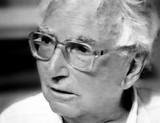
Viktor Frankl was a concentration camp prisoner survivor, Psychologist, Existentialist and author. His experiences within the Nazi death camps led him to form Logotherapy, from the Greek word Logos, which can mean study, word, spirit, God or meaning. Through observing who did and did not survive he concluded “He who has a why to live for can bear with almost any how.” He saw that people who had hopes of being reunited with loved ones, or who had projects they felt a need to complete, or who had great faith, tended to have better chances than those who had lost all hope.
Freud centred on a will to pleasure, as the root of all human motivation, whilst Adler a will to power. Frankl through Logotherapy postulates a will to meaning. He said "Everything can be taken from a man but one thing: the last of the human freedoms -- to choose one's attitude in any given set of circumstances, to choose one's own way". I find this statement powerful beyond measure.
He also went on to say “If a prisoner felt that he could no longer endure the realities of camp life, he found a way out in his mental life– an invaluable opportunity to dwell in the spiritual domain, the one that the SS were unable to destroy. Spiritual life strengthened the prisoner, helped him adapt, and thereby improved his chances of survival”.
Many slaves found solace and faith in Religion. Did this provide meaning within the meaningless that enabled them to adapt and survive? Christianity was also used by many to okay slavery which leaves a bad taste in my mouth because it feels like a double betrayal cloaked in further illusion for those who suffered at the hands of this inhumane ‘enterprise’. “Meaning must be found and cannot be given” said Frankl and so I have to also acknowledge that meaning is personal and so many would have found comfort in what resonated for them. Christianity appears to have acted as a personal and collective relationship with God.

I wasn’t there, I shouldn’t know, so why do I make these comparisons to slavery? And why do my emotions feel so strong? Beliefs and historical memories are re-awakened when in contact with a real or perceived external oppressive situation. Watching the film triggered and unlocked, emotions that were dormant. I have experienced this on at least 5 separate occasions prior to this and it is scary because there is no reference point to help provide meaning. Last year I came across the words Cellular memory and Internalised Oppression, the latter coined by Franz Fanon and everything just clicked into place.
My great, great grandmother was a slave and although I/we are generations removed from the actual experience of slavery, we still carry the scars of the experience thorough Cellular memory, also known as ‘Collective Colonial memory’(Tuckwell, 2002, p.39) in both our social and mental lives. Akbar (cited in Mackenzie-Mavinga,2003, pg 105) said “Psychologists and sociologists have failed to attend to the persistence of problems in and on our mental and social lives, which clearly have roots in slavery. Only the historian has given proper attention to the shattering realities of slavery, and has dealt with it only as descriptive of past events”.
Internalized oppression highlights the ongoing impact slavery; imperialism and colonisation have on the psychical level. Later writers use this term as well as internalised colonization and internalized racism. Alleyne (2004) said “It is the process of absorbing consciously or unconsciously the values or beliefs of the oppressor and subscribing to the stereotype and misinformation about one’s group...such a process leads to low self esteem, self hate and other complex defensive interpersonal behaviours” (p.48).

The legacy of the historical past has a traumatic affect in similar ways of post traumatic syndrome, where the pain and full acknowledgement is preferred to be avoided. What is the result of avoidance? How would this be displayed in behaviour? How can I/we fully heal if the unconscious does not become conscious? For me there are more questions now then ever before. Below are some examples of what I am thinking...

• I am a descendent of slaves, therefore what part of Africa did I originate from?
• My surname and family surnames are English sounding as far as I can go back, what is my true surname?
• What is my mother tongue?
• I fully believe in the notions of Cellular memory and Internalised Oppression as a result how much of what I do in my day to day life is motivated by proving “I am good enough?”
• How much of my culture, values and beliefs today are entwined with conditioning, trauma and fear from my historical past?
• Is who I think I am, really who I am? How can this be the truest essence of me, if a large part of my existence is informed by unconscious conditioned ways of behaving? Virtually raise your hand, or shout YES to the screen, if you can identify with this statement “You are black and therefore you have to work ten times harder than your white counterparts”. This is conditioning and this statement has been informed by our parents, parents, parents experiences, which is understandable however go deeper to ask who am I working hard for? What am I trying to prove and who am I trying to prove it too? Answer this honestly.
We all need to look at our ways of behaving as potentially this is another type of shackle. BE-ing is different from DO-ing. To BE is about reaching our potential and not proving our potential to others. Black psychologists such as Alleyne and Ellis speak of the ‘true black self’. This must exist because Cellular memory and Internalised oppression does. Therefore underneath the layers and layers of baggage that we unconsciously carry lies are truest essence. The answers also lie in finding out who we were before the trauma of slavery. Whilst I also believe that we can choose to define, re-define who we are at any given moment, acknowledging the past is also important.
Internalized oppression is a collective experience of black people (Tuckwell, 2002), as a result the likelihood of other black people experiencing similar thoughts and feelings triggered by any type of stimuli is high. This is the main reason I have decided to write this. The information is there but hidden away in books. If any of what I have said resonates with you, or makes you question or explore more, than I guess I have done my bit in highlighting the known.
I have never thought about visiting a Slavery focused museum before now. Avoidance I think played a large part, however due to the emotions triggered by The Rising of the Planet of the Apes and my previous reactions to other types of stimuli, it felt necessary. So last week I went to the International Slavery Museum in Liverpool to look at the past, connect the dots and process it properly, in order to reduce my own known and unknown historical baggage.
My review/thoughts and insights of The International Slavery Museum will be posted tomorrow evening.
References:
Tuckwell, G. (2002). Racial identity, white counsellors and therapists.
Mckenzie-Mavinga, I. (2003). Linking social history and the therapeutic process in research and practice on black issues
Alleyne, A. (2004). The internal oppressor and black identity wounding
Related Posts:
1.Dot to Dot:Part 2
2.Road Blocked
3.Stamps from the African Diaspora: Review
© Lisa Bent 2011
• My surname and family surnames are English sounding as far as I can go back, what is my true surname?
• What is my mother tongue?
• I fully believe in the notions of Cellular memory and Internalised Oppression as a result how much of what I do in my day to day life is motivated by proving “I am good enough?”
• How much of my culture, values and beliefs today are entwined with conditioning, trauma and fear from my historical past?
• Is who I think I am, really who I am? How can this be the truest essence of me, if a large part of my existence is informed by unconscious conditioned ways of behaving? Virtually raise your hand, or shout YES to the screen, if you can identify with this statement “You are black and therefore you have to work ten times harder than your white counterparts”. This is conditioning and this statement has been informed by our parents, parents, parents experiences, which is understandable however go deeper to ask who am I working hard for? What am I trying to prove and who am I trying to prove it too? Answer this honestly.
We all need to look at our ways of behaving as potentially this is another type of shackle. BE-ing is different from DO-ing. To BE is about reaching our potential and not proving our potential to others. Black psychologists such as Alleyne and Ellis speak of the ‘true black self’. This must exist because Cellular memory and Internalised oppression does. Therefore underneath the layers and layers of baggage that we unconsciously carry lies are truest essence. The answers also lie in finding out who we were before the trauma of slavery. Whilst I also believe that we can choose to define, re-define who we are at any given moment, acknowledging the past is also important.
Internalized oppression is a collective experience of black people (Tuckwell, 2002), as a result the likelihood of other black people experiencing similar thoughts and feelings triggered by any type of stimuli is high. This is the main reason I have decided to write this. The information is there but hidden away in books. If any of what I have said resonates with you, or makes you question or explore more, than I guess I have done my bit in highlighting the known.
I have never thought about visiting a Slavery focused museum before now. Avoidance I think played a large part, however due to the emotions triggered by The Rising of the Planet of the Apes and my previous reactions to other types of stimuli, it felt necessary. So last week I went to the International Slavery Museum in Liverpool to look at the past, connect the dots and process it properly, in order to reduce my own known and unknown historical baggage.
My review/thoughts and insights of The International Slavery Museum will be posted tomorrow evening.
References:
Tuckwell, G. (2002). Racial identity, white counsellors and therapists.
Mckenzie-Mavinga, I. (2003). Linking social history and the therapeutic process in research and practice on black issues
Alleyne, A. (2004). The internal oppressor and black identity wounding
Related Posts:
1.Dot to Dot:Part 2
2.Road Blocked
3.Stamps from the African Diaspora: Review
© Lisa Bent 2011

